


World Cup Short-Term Rental Strategy: How Property Owners Should Prepare for Event-Driven Demand
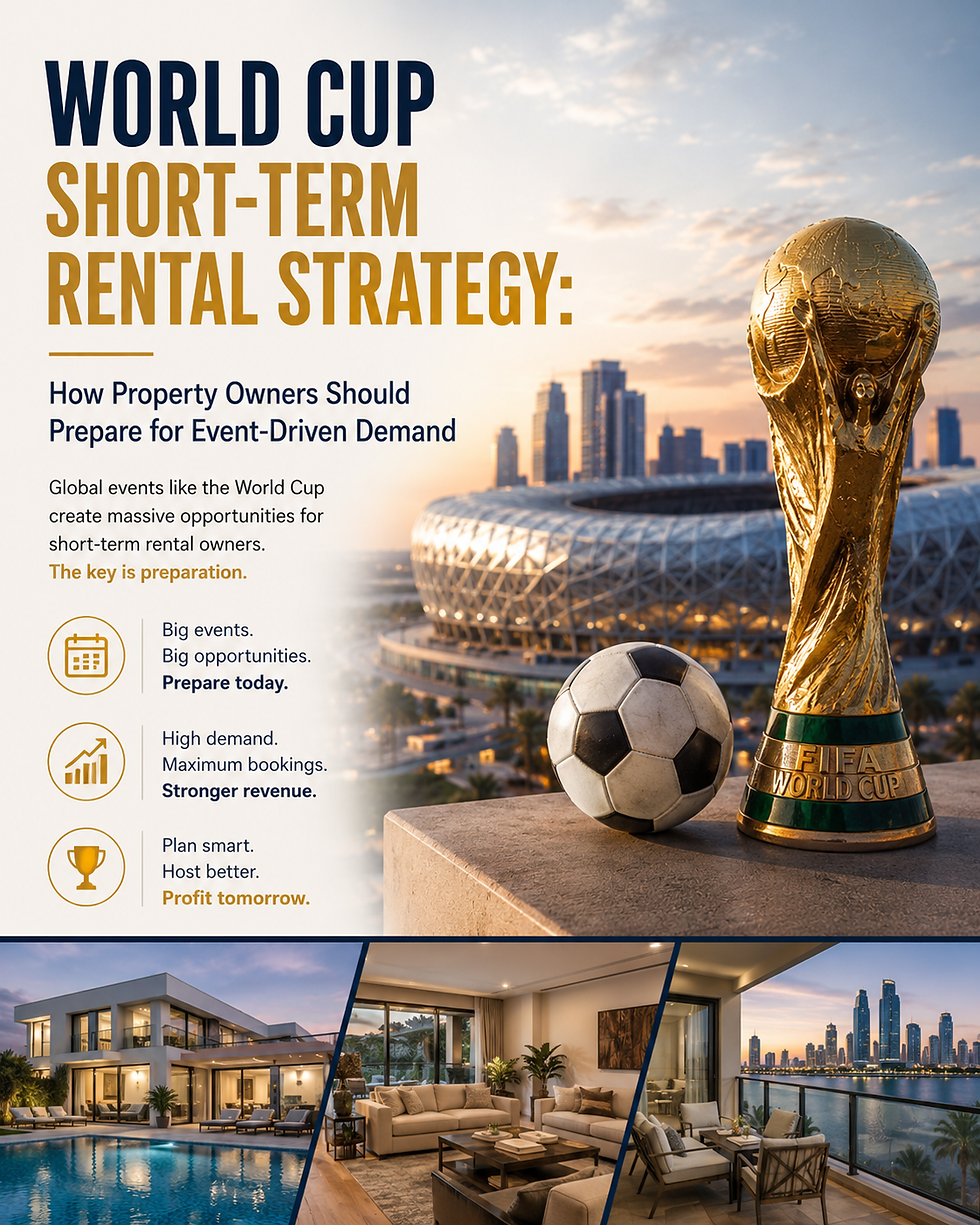
Understanding World Cup Short-Term Rental Strategy: How Property Owners Should Prepare for Event-Driven Demand is becoming increasingly important as major global events reshape booking behavior, pricing trends, occupancy pacing, and competitive positioning across short-term rental markets.
The FIFA World Cup is not just a sporting event. For short-term rental owners, it creates one of the largest event-driven demand opportunities in the industry. But many operators misunderstand what actually drives performance during global events.
Most property owners immediately focus on increasing nightly rates.
However, a successful World Cup short-term rental strategy is rarely about simply charging more.
The operators who usually outperform are the ones who:
Understand booking behavior
Optimize market positioning
Monitor demand pacing carefully
Maintain operational consistency
Adjust pricing strategically
Adapt faster than competitors
Major events reward disciplined operators—not reactive ones.
Why the World Cup Creates Different Booking Behavior
Traditional seasonal demand tends to move gradually. The World Cup does not.
World Cup demand is:
Highly compressed
Emotionally driven
Internationally influenced
Transportation dependent
Heavily affected by venue proximity
Strongly tied to group travel patterns
This creates unusual booking behavior that many operators misread.
A strong World Cup short-term rental strategy requires understanding that markets often experience:
Sudden occupancy spikes
Temporary ADR inflation
Compressed booking windows
Increased inquiry volume
Stronger competition
More international travelers
Owners relying on standard pricing assumptions frequently underperform because traditional seasonality models stop applying during major event-driven demand cycles.
The Biggest Pricing Mistake Property Owners Make
One of the most common mistakes during the World Cup is raising rates too aggressively too early.
At first, this feels logical:
But emotional pricing can weaken booking momentum significantly.
Why Overpricing Hurts Conversion
When pricing rises faster than actual market demand supports, listings often lose conversion velocity.
This can reduce:
Click-through rates
Search visibility
Occupancy pacing
Booking momentum
overall listing performance
A successful World Cup short-term rental strategy balances pricing power with conversion efficiency.
Revenue optimization is not simply about maximizing the nightly rate. It is about maximizing total revenue efficiency across the entire booking window.
Booking Windows Behave Differently During Major Events
Across many STR markets, booking windows have become increasingly last-minute.
The World Cup changes that pattern entirely. Travelers attending major global events often begin booking:
6 months early
9 months early
Sometimes even 12 months in advance
This forces operators to rethink traditional pricing behavior.
A strong World Cup short-term rental strategy often requires:
Opening calendars earlier
Implementing far-out pricing premiums
Monitoring occupancy pacing aggressively
Adjusting dynamically over time
Tracking future demand trends carefully
Owners waiting too long to prepare inventory may unintentionally release high-demand dates below true market value.
Why Market Positioning Matters More Than Price
During the World Cup, guests are not simply comparing prices.
They are evaluating:
convenience
transportation access
reliability
operational professionalism
location clarity
group functionality
This changes the competitive landscape significantly.
Guests often ask: “Which property feels easiest and safest for this trip?”
rather than: “Which listing is cheapest?”
A strong World Cup short-term rental strategy requires listings to clearly communicate:
Proximity to venues
Airport access
Public transportation
parking availability
Nearby entertainment
Walkability
Suitability for groups
International travelers are often unfamiliar with local markets. This makes trust signals and listing clarity significantly more important during event-driven demand periods.
Group Travel Demand Increases During the World Cup
One major shift during the World Cup is increased group travel demand.
Families, friends, and international travelers frequently coordinate trips together.
This increases demand for:
Multi-bedroom properties
Shared gathering areas
Larger dining spaces
Outdoor entertainment setups
Flexible sleeping arrangements
Multiple bathrooms
Properties optimized for group functionality often outperform significantly during major events.
An effective World Cup short-term rental strategy recognizes that property layout can become a major revenue driver during high-demand periods.
Strong Listing Presentation Becomes Critical
Guests compare listings quickly during major events. This makes presentation quality extremely important.
Photo Sequencing Matters
Your strongest amenities should appear immediately within the first few photos.
This may include:
Rooftop views
Entertainment spaces
Patios
Fire pits
Hot tubs
Game rooms
Scenic surroundings
Large gathering spaces
Weak photo sequencing reduces conversion and creates friction.
Operational Trust Signals Matter More
Guests also look for confidence indicators before booking.
Strong-performing listings usually include:
Professional communication
Fast response times
Polished presentation
Detailed guidebooks
Strong review history
Clear check-in instructions
Operational consistency becomes a competitive advantage during event-driven demand periods.
The “Halo Effect” Beyond Host Cities
One of the biggest misconceptions surrounding World Cup demand is that only official host cities benefit. That assumption is already proving false.
As hotel inventory tightens and ADR rises near venues, travelers begin searching outward for:
Lower-cost alternatives
Larger accommodations
Quieter destinations
Easier parking
Nearby regional markets
This creates an opportunity for:
suburban STR markets
secondary cities
regional vacation destinations
nearby resort towns
commuter-friendly locations
Properties located outside official host cities may still experience:
occupancy spikes
ADR growth
longer booking windows
increased inquiry volume
A smart World Cup short-term rental strategy recognizes these secondary demand opportunities early.
Dynamic Pricing Matters More Than Ever
The World Cup is one of the clearest examples of why static pricing underperforms.
Demand conditions shift rapidly during major events.
Strong operators continuously monitor:
Occupancy pacing
Competitor pricing
Cancellation behavior
Stay length trends
Booking velocity
Supply growth
Regional demand movement
Pricing should evolve as market conditions evolve.
The operators who maximize RevPAR during the World Cup are usually the ones adjusting strategically—not emotionally.
Minimum Stay Strategy Can Impact Revenue
Many operators unintentionally damage occupancy flexibility by increasing minimum stays too aggressively.
While longer stays may appear attractive, rigid restrictions often create:
Orphan gaps
Reduced booking flexibility
Missed occupancy opportunities
Unnecessary vacancy
A successful World Cup short-term rental strategy aligns minimum stay requirements with:
match schedules
traveler arrival behavior
transportation patterns
regional pacing trends
Flexibility often becomes a competitive advantage during compressed booking windows.
Competition Increases Alongside Demand
Major global events also create temporary supply expansion.
During the World Cup:
Dormant listings reactivate
Hotels adjust pricing aggressively
New operators enter the market
Homeowners test STR demand temporarily
This means competition rises alongside demand.
Owners assuming everything will book automatically often become complacent with:
Pricing
Listing quality
Communication
Operations
Guest experience
A strong World Cup short-term rental strategy requires maintaining discipline throughout the entire booking cycle.
Operations Become a Revenue Driver
Major events place additional stress on operational systems.
Owners should prepare for:
Higher inquiry volume
Tighter turnovers
Elevated maintenance pressure
Faster communication expectations
More international travelers
Higher guest expectations
Operational inconsistency during peak demand periods can damage reviews quickly.
And poor reviews during major events can materially impact conversion while demand is still accelerating.
The best operators treat operations as part of revenue optimization—not simply backend management.
Final Thoughts
The FIFA World Cup creates one of the largest event-driven demand opportunities the short-term rental industry experiences. But the owners who benefit most are rarely the ones who simply raise prices the highest.
The operators who usually outperform are the ones who:
Understand demand behavior
Optimize positioning
Monitor pacing closely
Maintain operational consistency
Use dynamic pricing strategically
Adapt faster than competitors
Ultimately, a successful World Cup short-term rental strategy is about more than pricing. It is about timing, positioning, operational execution, and maximizing revenue efficiency throughout the entire booking window.


Comments